Starting genealogy research can feel overwhelming, especially if you are unsure what information you already have or which records will be useful. A little preparation before you begin professional research helps clarify your goals and lets historical records be used far more effectively.
In short: You do not need to know much to begin. Start by gathering what you already have, talking to older relatives while you can, and writing down what you hope to learn. A professional can take it from there.
How to begin
- Gather any documents and photographs you already have, even incomplete ones.
- Talk to older relatives while you can. Their memories are records too.
- Write down your questions and what you hope to learn.
- You do not need complete or perfect information to start.
Talk to older relatives while you can
Conversations with family members are often one of the most valuable starting points. Parents, grandparents, aunts, uncles, and older relatives may recall names, locations, relationships, or stories that are not recorded anywhere else.
It helps to ask about full names, nicknames, places lived, occupations, religious affiliations, and any known migrations. Even informal recollections can provide clues that guide documentary research later. Recording the conversation or taking notes preserves details that might otherwise be lost.
Gather documents and photographs
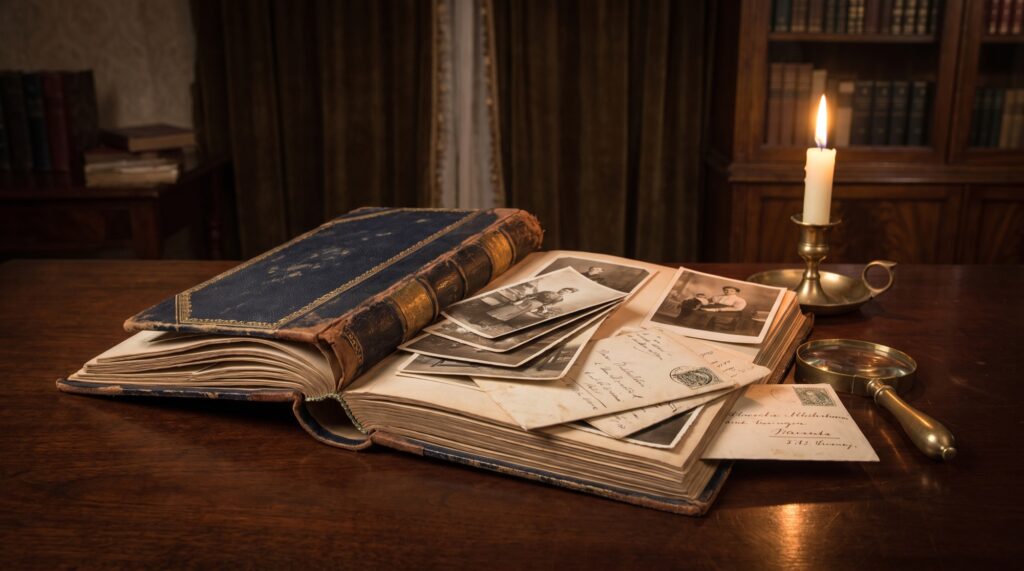
Any documents or photographs you already have can help, even if they seem incomplete or informal. Birth, marriage, and death records, immigration papers, family Bibles, and old correspondence can all carry valuable information.
Photographs may include handwritten notes, studio names, locations, or dates that add context. Digital scans or phone photos are fine at this stage; original condition is not critical. If documents are missing, that is common and does not prevent meaningful research.
Write down your questions and goals
Taking a little time to identify what you hope to learn makes professional research more focused and efficient. Your goals might include identifying an unknown ancestor, confirming family connections, understanding DNA results, or resolving conflicting information.
You do not need a perfect startMany people hesitate because their information feels incomplete or unreliable. You do not need every detail confirmed before beginning. Incorrect trees, missing records, and confusing DNA results are common, and careful research is designed to address exactly that, not to judge what you already have.
When does it make sense to hire a professional?
Clear goals also help you see when professional research is worth it, usually for more complex questions or when you have reached a wall. If you are unsure where your research stands, a research consultation can identify the gaps and set a clear path forward, or you can book a free consultation to talk it through.
Common questions
Do I need to know a lot before starting genealogy research?
No. You can begin with what you already have, plus what older relatives remember. Incomplete or uncertain information is normal, and a professional can help sort it out.
What should I gather before hiring a genealogist?
Any documents and photographs you have, such as birth, marriage, and death records, immigration papers, family Bibles, and old letters and photos, along with notes from conversations with older relatives and a short list of what you hope to learn.
What if my family tree has mistakes or gaps?
That is common and does not prevent meaningful research. Incorrect trees, missing records, and confusing DNA results can usually be resolved through careful, documented work.