Canadian Citizenship by Descent
Specialised genealogical research for US citizens, and others outside Canada, who need to document Canadian-born ancestors for a citizenship by descent application. The research is conducted in Canadian archival sources: the records that successful applications are built on.
Bill C-3 changed the rules on December 15, 2025.
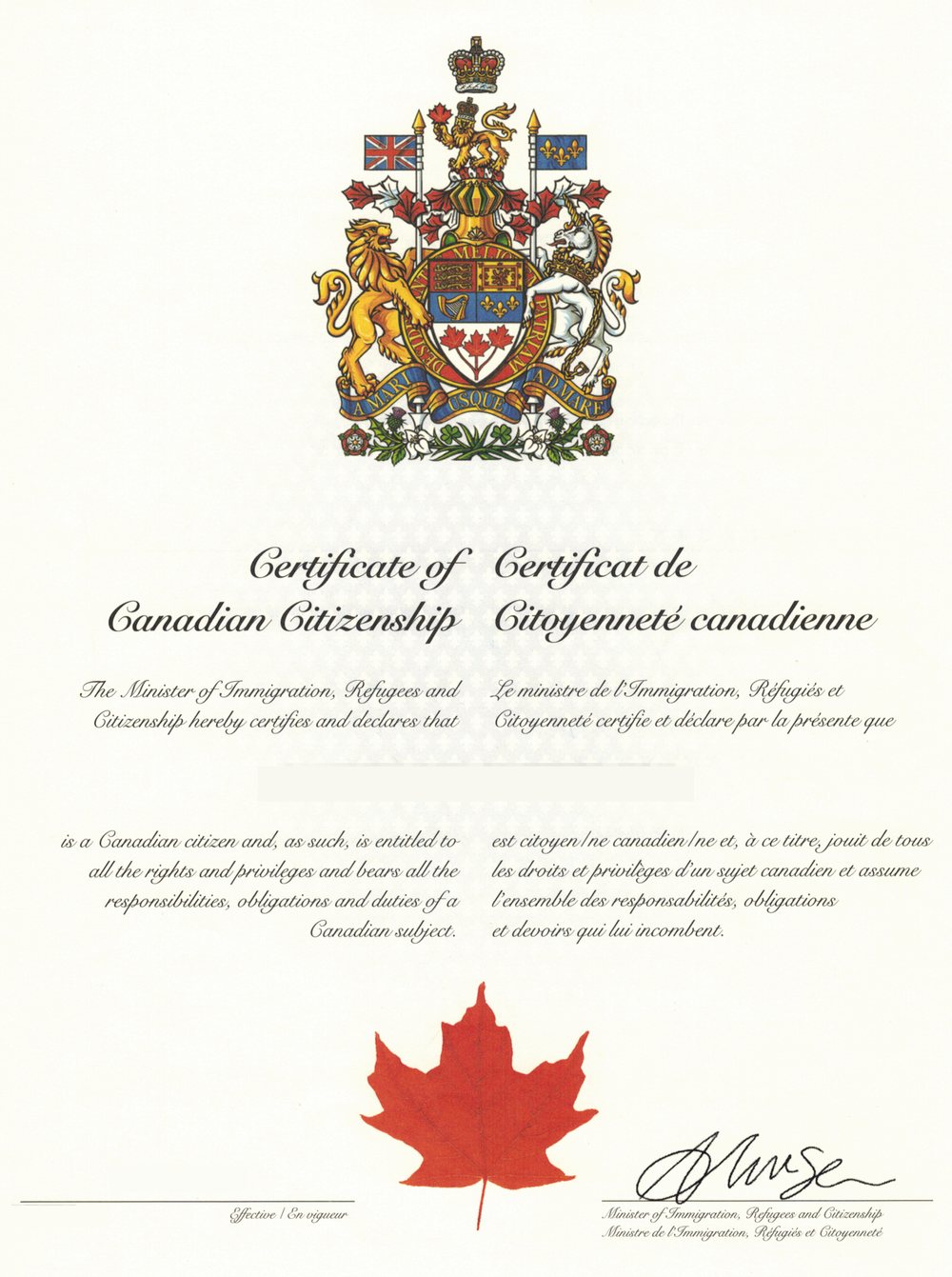
On December 15, 2025, Canada’s Bill C-3 came into force. It removed the first-generation limit that had previously restricted citizenship by descent to those born directly to a Canadian citizen. The change opened eligibility to second-generation and later descendants (grandchildren, great-grandchildren) under certain conditions.
The rules differ depending on when you were born. If you were born outside Canada before December 15, 2025, to a Canadian parent who was also born outside Canada, you may be a Canadian citizen automatically, provided no one in the chain formally renounced citizenship. If you were born on or after that date, eligibility depends on whether your Canadian parent spent at least 1,095 days in Canada before your birth.
In either case, eligibility is not self-certifying. IRCC requires a citizenship certificate as proof, and obtaining that certificate requires a documented genealogical file that traces the chain of descent through primary source records. That is the work this service does.
There is no rush to decide today.
Many people exploring citizenship by descent are not in a hurry. They are not planning to move; they simply want the option held open, documented and ready, in case it matters later. That is a sound reason to do the research now, while the records are still accessible and the relatives who remember the family details are still here to ask.
If that describes you, there is no need to commit to anything yet. The first useful step is just understanding what proving your claim would actually take.
Three distinct situations arrive under this service. Each has the same core need, documented proof of Canadian ancestry, but a different starting point.
The American applicant. A US citizen with a Canadian-born parent, grandparent, or more distant ancestor, now eligible to apply under Bill C-3. The research establishes each generational link from the applicant back to the qualifying ancestor, in the archival sources IRCC relies on.
The Canadian applicant. A person born in Canada, or a Canadian resident, who has not yet obtained their citizenship certificate and needs the documentary genealogical file to support the application.
The Canadian helping American relatives. A Canadian whose American family members may be eligible under Bill C-3. This situation is common and almost entirely unaddressed by existing services. Many Canadians know the family history far better than their American relatives do, and want to help their family understand and document the claim. This service can be engaged on behalf of relatives.
Not every chain holds together.
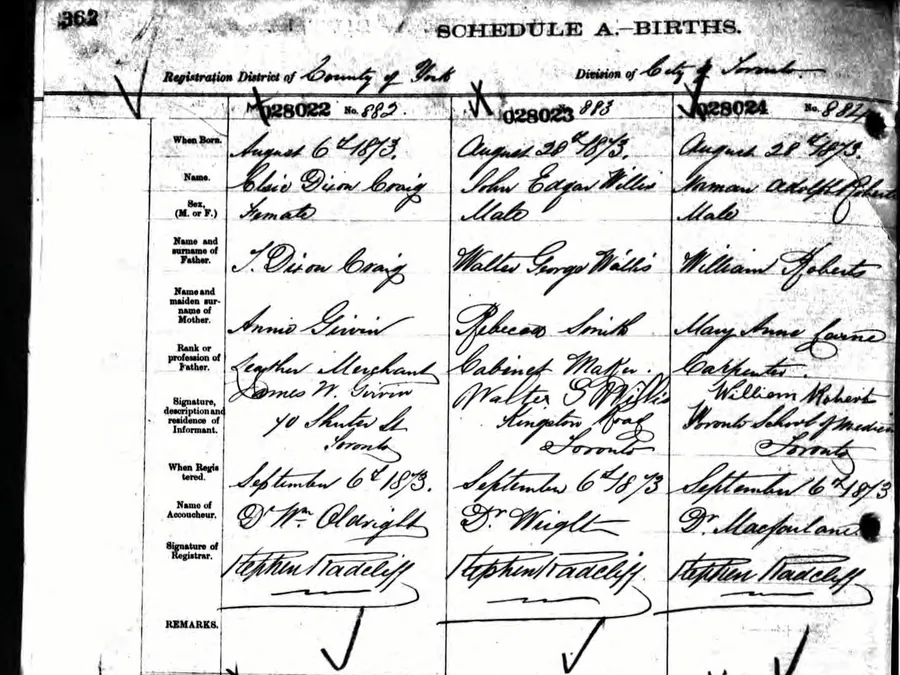
Research may confirm a complete, well-documented chain of descent. It may also reveal that the chain is broken, because an ancestor naturalized in another country, formally renounced citizenship, or because the records needed to prove a particular generation are incomplete or missing.
Both outcomes are delivered with the same care. A clearly documented negative finding, explaining what was searched, what was found, and why the chain cannot be established, is itself a professional service. It saves time and cost for everyone involved, and it is more useful than a file that papers over uncertainty.
If the records support your application, the file will say so clearly and show exactly how. If they do not, you will know that too, before you file.
What the research typically involves.
- We begin with what you already know: names, places, family stories, any prior research. From there, I identify the qualifying ancestor and map the generational chain on paper, so we know exactly what needs to be proved before research begins.
- Research draws on Library and Archives Canada, provincial vital statistics offices, federal census returns, and the relevant church registers, the records Canadian authorities actually rely on. Where records are held in archives that require an in-person visit, I attend directly or coordinate a trusted local researcher.
- Finding the record is half the work. IRCC asks for documents from the authority that issued them, so a register image on a subscription site is how we identify the act and confirm what it says, rather than the document that goes into your application. Quebec is the sharpest example: IRCC’s own guidance does not accept a birth or marriage certificate issued there before 1 January 1994, so a fresh copy has to be ordered from the Directeur de l’état civil.
- From there we work out together where the authentic version is held and what is needed to obtain it. That part is collaborative. Some records are quicker to request through me, some are simpler in your hands, and which is which depends on the office, the country, and where you are. We decide that case by case. Either way you know the exact source, which office holds it, and what they require, rather than being handed a citation on its own.
- Where a record cannot be obtained directly, I identify the best available secondary evidence and explain, in writing, why it is sufficient, and where it falls short. Nothing is papered over. Where a record turns out not to exist, or cannot be produced, that becomes part of the file rather than a gap in it. IRCC asks for a written explanation and for proof that you tried, which in practice means confirmation from the office or archive holding the records that they are not available. Obtaining that confirmation is part of the work, and the search behind it is recorded in enough detail that nobody has to repeat it.
- The final file is organised the way an application reviewer reads it: each generation in turn, each record in context, with a narrative that explains what every document establishes and how each link in the chain was made.
What this research looks like in practice.
A client in the midwestern United States came with a family story: a great-grandmother, born somewhere in Quebec, who had emigrated to New England in the early 1900s. The client believed she qualified under Bill C-3 but had no documents beyond a name and an approximate decade of birth.
Research began with Quebec parish registers and federal census returns. The great-grandmother was located in the 1891 and 1901 Canadian censuses, with a confirmed birthplace and parents’ names. Her birth record was found in a Quebec Catholic register, establishing her Canadian birth from primary sources. Each subsequent generation, her daughter, her granddaughter, the client’s parent, was traced through American vital records and census data, with attention to any naturalization events that might have broken the citizenship chain. None were found.
The completed file documented four generations, cited twelve primary sources, and was organised for IRCC review. The client submitted her citizenship certificate application with a complete evidential record.
Case details anonymised. Published with client permission.
Documented findings, yours to keep.
A documented lineage from applicant to Canadian-born ancestor, digital copies of every supporting record, and a written narrative explaining how each record establishes its claim. The file is structured for an application reviewer, not written as a genealogy report for its own sake, but as a clear evidential package that tells a single coherent story.
An optional add-on is available to assist with obtaining certified copies of records identified during research. Clients who prefer to obtain copies themselves can do so using the citations provided. Each source is cited precisely enough to request the record directly from the issuing archive or registry.
This is documentation you can defend. Anyone can order copies of certificates from an archive. The harder work, and the part that actually matters to a reviewer, is proving that each generation truly connects to the next, judging whether a record proves what it appears to prove, and writing down the reasoning so someone else can follow it. A pile of certificates is not the same as a file that holds together.
Citizenship by descent research is quoted as a fixed-price package, from $1,700 USD. The price depends on one thing: how many generations separate you from your Canadian-born ancestor. A great-grandparent is a shorter chain than a third great-grandparent, and shorter chains take less work to document.
You do not need to work out which package applies. Most people do not know exactly where their Canadian ancestor sits in the family tree, and that is normal. Establishing it is part of the free consultation. We look at what you know, identify the likely qualifying ancestor, and I quote you a single fixed price before any work begins.
What fixed price means here. You know the total before we start, and it does not change. If the research turns out to take half again as long as expected, that is my risk, not your invoice. There is no hourly meter running, and no bill that arrives larger than the number you agreed to. Payment is split evenly: half when we begin, half on delivery.
A few specifics. A Canadian ancestor born in Quebec is quoted separately, because Quebec records carry higher archive fees and require French-language parish research. If several family members are applying on the same line, there is no additional fee for the extra applicants. And in the rare case that a chain hits a genuine dead end that changes the scope of the work, I stop and we discuss it before anything further is done.
Fee and scope are confirmed during the free consultation, before any work begins.
How this works, and how you will hear from me.
I take a small number of projects at a time, so your research is not queued behind a backlog. Once we have agreed the work, your file is opened and the first records are being searched, not waiting for a slot.
Archives and record offices set their own response times, and a single slow repository can hold up a file that is otherwise finished. A completion date is not something I can honestly promise you. You can ask where your research stands at any point and get a straight answer.
Understanding citizenship by descent
Canadian citizenship by descent allows people born outside Canada to claim citizenship through a Canadian-born parent or grandparent. The rules governing who qualifies have changed significantly over time, most recently in December 2025, when Bill C-3 removed the first-generation limit that had previously cut off citizenship transmission after one generation born abroad.
Under the rules in effect as of December 15, 2025, a Canadian parent born outside Canada can pass citizenship to a child born outside Canada, provided the parent can demonstrate at least 1,095 days of physical presence in Canada prior to the child’s birth. This change has opened eligibility to many people who were previously excluded.
Genealogical research is typically required at two stages: first, to establish that a qualifying ancestor was born in Canada; and second, to document the unbroken line of descent from that ancestor to the applicant. The evidentiary standard is not simply family knowledge. IRCC requires cited, primary-source documentation. Birth, marriage, naturalization, census, and immigration records all play a role depending on when and where the ancestors lived. What IRCC accepts as proof is narrower than many applicants expect, and a printout from a subscription site is not sufficient on its own.
Official IRCC resources
Questions about the process.
Do I need a genealogist to apply for Canadian citizenship by descent?
Not always, but in most cases, yes. IRCC requires primary source documentation for each generation in the chain of descent. If your family records are well-organised and the documents are easy to obtain, you may be able to compile the file yourself. In practice, most applicants have incomplete records, gaps in the chain, or ancestors who lived in jurisdictions where records require archival access. A professional genealogist who works to BCG standards ensures the file meets the evidentiary bar IRCC applies, and catches problems before they reach a reviewer.
What records does IRCC require for a citizenship by descent application?
IRCC requires documentation that establishes each link in the generational chain, from the applicant back to the qualifying Canadian-born ancestor. This typically means birth, marriage, and death records for each generation, plus any naturalization records that might show a break in the citizenship chain. Canadian records are drawn primarily from Library and Archives Canada, provincial vital statistics registries, and church registers. American records for US-based applicants include federal census returns, state vital records, and immigration files. The specific documents required depend on when and where each ancestor was born and lived.
How long does citizenship by descent genealogy research take?
How much work is involved depends almost entirely on how many generations separate you from your Canadian-born ancestor, and on how well the records for those generations survive. That is why the work is quoted as a fixed-price package from $1,700 USD rather than by the hour. The generational depth is established during the free consultation, and you are given one price before any work begins. Calendar time is a different matter, and largely not mine to control. Archives and vital statistics offices set their own response times, some measured in weeks and some in months, so a completion date is not something I can honestly promise you. What I will do is tell you what I am waiting on and why, as the work progresses.
If I was born in the US, can I still apply under Bill C-3?
Possibly, depending on when you were born and when your Canadian ancestor was born. Bill C-3, which came into force on December 15, 2025, removed the first-generation limit that had previously blocked citizenship transmission beyond one generation born outside Canada. If you were born before that date to a Canadian parent who was also born outside Canada, you may already be a Canadian citizen, provided no one in the chain renounced citizenship. If you were born on or after December 15, 2025, eligibility depends on whether your Canadian parent spent at least 1,095 days in Canada before your birth. The free consultation is the right place to work through whether your specific situation qualifies.
What if the research shows I do not qualify?
A clearly documented negative finding is itself a professional service. If the records show that an ancestor naturalized in another country, formally renounced citizenship, or that a required link in the chain cannot be established from primary sources, that finding is delivered in writing, explaining what was searched, what was found, and why the chain cannot be confirmed. This saves the time and cost of filing an application that IRCC would reject, and it gives you certainty rather than uncertainty.
Further Reading
Genealogist First or Lawyer First? What Each One Does With a Citizenship by Descent File
A Naturalized Canadian Ancestor Counts for Citizenship by Descent
Your Canadian Ancestor Has No Birth Certificate. Here Is What You Use Instead
American Records in a Canadian Citizenship by Descent File: What They Prove and What They Cannot
Can You Trust an AI Chatbot on Canadian Citizenship by Descent?
Quebec Birth Certificate for Citizenship by Descent: The 1994 Rule
What IRCC Now Accepts as Proof of Canadian Citizenship by Descent
Canadian Citizenship by Descent: Genealogy Research and Proving Your Ancestry